South America - Physiography
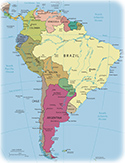
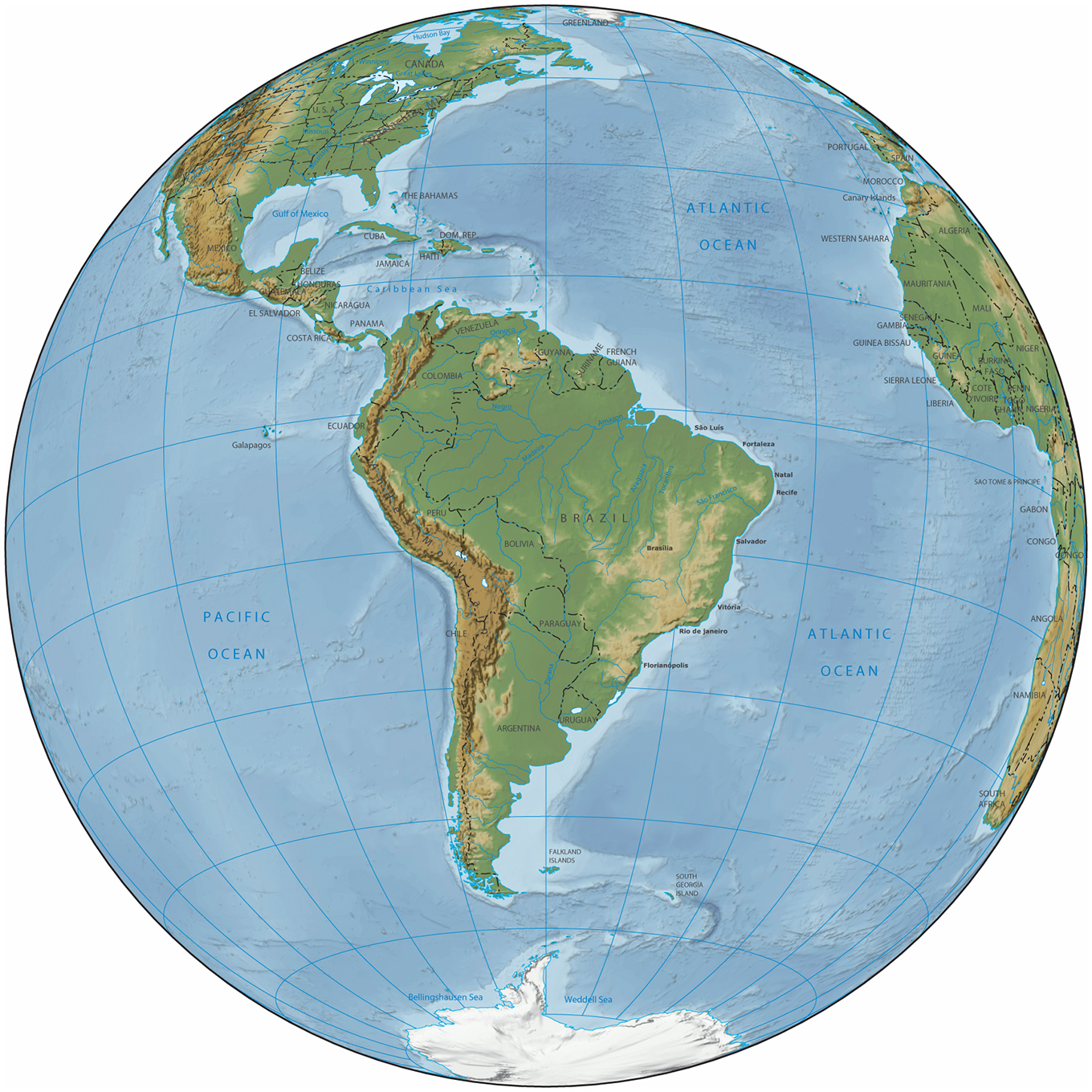
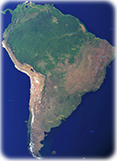
Physical map of South America in the globe (on the right, click to enlarge). South America's physiography is mostly defined by the Andes Mountains along the Pacific coast, the massive Amazon Basin in the north, various highlands and plateaus in the east, and the extensive central river basins and grasslands (including the Pampas) that form the continent's relatively flat interior.
This varied landscape includes mountains, river systems, and plains, with stable shields and basins characteristic of the stable eastern part and the dramatic Andes marking the west.
The Atlantic Ocean is the second largest of the world's five oceans, after the Pacific Ocean. It is a body of water between Africa, Europe, the Arctic Ocean, the Americas and the Southern Ocean. The lowest point is Milwaukee Deep in the Puerto Rico Trench (-8,605 m).
Globes

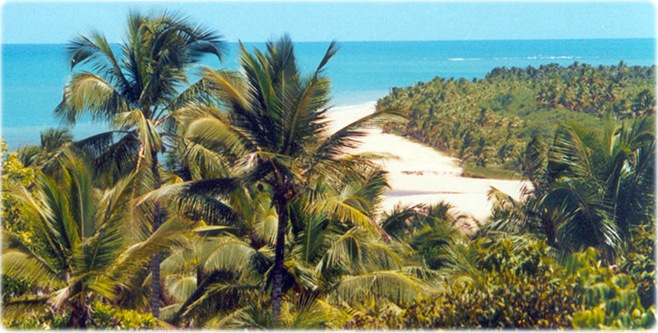
Beach in Porto Seguro (below), in southern Bahia, Brazil. The first European settlement in Brazil was established in this region, in 1503, by the Portuguese. Today the region is one of the most popular South American tourist destinations.
South America - Physiography
Globes


Click to enlarge
|
Copyright © Geographic Guide - Maps World. Continents in the globe. |